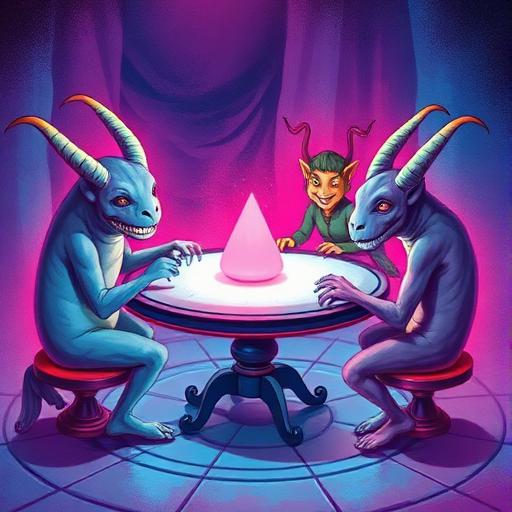
NOBODY KILLS A 2/2
You resolve on turn three in 8,028 of 10,000 simulated games and the table lets you — because a fresh Sisay genuinely is harmless. Here is the exact board state where that stops being true, and the removal that actually beats you when it does.
You are on the table's radar from turn three, and the only question is whether they leave you there. Sisay resolves on turn three in 8,028 of 10,000 seeded goldfish iterations (mean 2.96, 99.1% by turn six), so the pod sees your commander before it sees anything else — and at a bracket 4 table where four Game Changers were named in the pregame conversation, nobody extends you the durdly-five-colour-goodstuff benefit of the doubt. What buys you time is that a freshly cast Sisay is genuinely harmless, and good players can see that too: with no other legendary permanent out she is a 2/2 whose gate reads 'mana value less than 2' — three cards in the entire deck — and with zero legendary lands in the list, the mana-value-0 floor that would otherwise always be live simply isn't there. Nobody spends removal on that.
The real threshold is unusually legible, and it isn't Sisay — it's colours among your OTHER legendary permanents. The ladder runs 3 / 10 / 23 / 28 / 33 fetchable targets at power 2 / 3 / 4 / 5 / 6. The 2-to-3 colour step is the whole game: plus thirteen targets in one card, from 'pile of undersized legends' to 'toolbox that finds an answer to almost anything.' The fifth colour is a trap for your attention — it buys combat stats and Jodah's anthem and zero new access, because nothing in this deck costs more than five. Your grace period expires at the third colour. Spend it there.
Four things flip you from ignored to archenemy, and only one of them is a card. First: five untapped colour-producing sources next to an untapped Sisay. Anyone counting mana reads that as 'activation available,' and note that she has no tap symbol at all — summoning sickness never gates her, so 'she only just came down' is not the reprieve opponents assume. Second, and louder than any legend you fetch: an omni-mana body resolving. Bloom Tender, Faeburrow Elder, Jegantha, Esika. The table knows the activation is five distinct pips with zero generic, so the body that solves that is the tell. Third: Najeela, the Blade-Blossom, at which point you are simply the archenemy. Fourth: a second activation inside one turn cycle, which retires any remaining doubt about what the deck is.
So sequence the colours onto bodies that read fair. Katilda (1/1), Reki (1/2), Yoshimaru (1/1), Bristly Bill, Lotho — and prefer the two-colour legends, because Katilda, Kutzil, Kinnan, Lotho, Kambal and Saffi each buy two rungs on one unthreatening card. Hold the five-pip payment until you intend to spend it: visibly open WUBRG taxes the whole table's plays, but it also bluffs interaction you structurally cannot have, since all six counterspells and both free protection instants are non-legendary and must be drawn. A tapped-out board holding a modest permanent is quieter than an open board holding nothing.
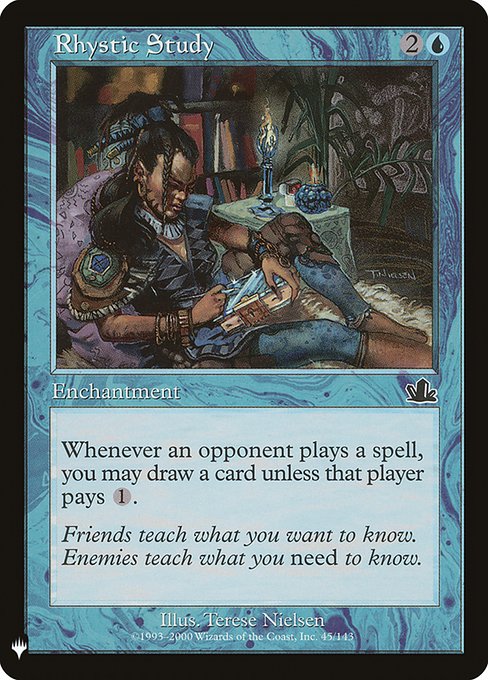
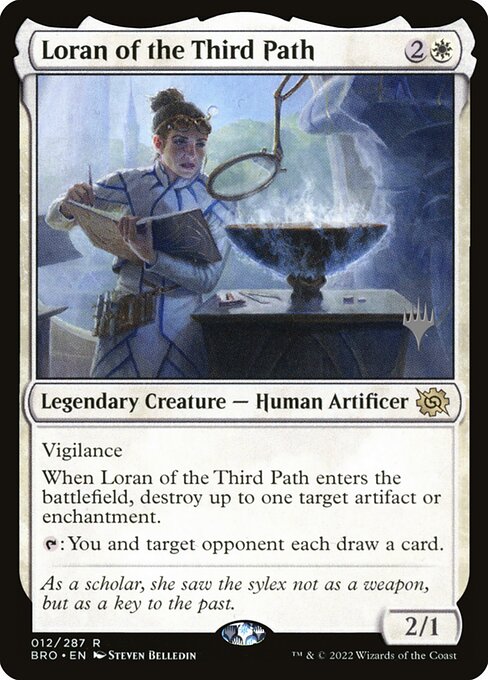
The deflection asymmetry here is one almost no other deck gets: your scariest cards live in your library and you can reach them at will. Most decks must draw and hold their finisher; you never need Najeela or Jodah in hand. Play the entire midgame as a fair legends deck and stay one activation from the kill, then time the tell for the turn it wins rather than the turn it impresses. Cheap spotlight-management is fetchable too — Loran of the Third Path's '{T}: You and target opponent each draw a card' is a political card with a body, and Kambal and Sheoldred read as hate aimed at the table's engine seat rather than at anyone in particular. Rhystic Study is the exception and the trap: it is a Game Changer, it is non-legendary so it is a card you drew rather than a card you chose, and it will make you the archenemy faster than anything Sisay can find. Think twice about deploying it at a table still deciding who to hit.
Now the mirror, because knowing how you die is how you sequence. The good pilots do not kill Sisay — killing her costs you the recast tax and the ladder, but you rebuild, and if she dies mid-activation the fetch still happens off her last known power. They kill the rung: the one legend that is the sole source of a colour, in response to the activation, so the fetch shrinks. Audit that every turn. Which colour is single-sourced? That permanent, not your commander, is the removal magnet, and Shalai, Voice of Plenty — hexproof for you and every other creature you control — is the fetch that retires the whole attack. The other way you die is a sweeper, which is doubly expensive against you: it takes the board and drops the ladder from 28 targets back to three.
Embrace the label when three conditions land together: three or more colours among your other legends, the five pips payable, and either a protection effect or Kutzil, Malamet Exemplar holding the window open. That is the pivot. Until then, be the fourth-most-interesting board at the table on purpose. One open question worth knowing rather than acting on: her gate reads power, not colour count, and both Flowering of the White Tree (+2/+1 on legendary creatures) and Jodah's anthem raise power — read together, the two cards say the ceiling is higher than the ladder table implies. The strategic frame keeps that in the unverified column and so should you; nothing in the deck costs more than five anyway, so it changes nothing today.
They do not kill your commander. They kill the one legend that is your only green.